
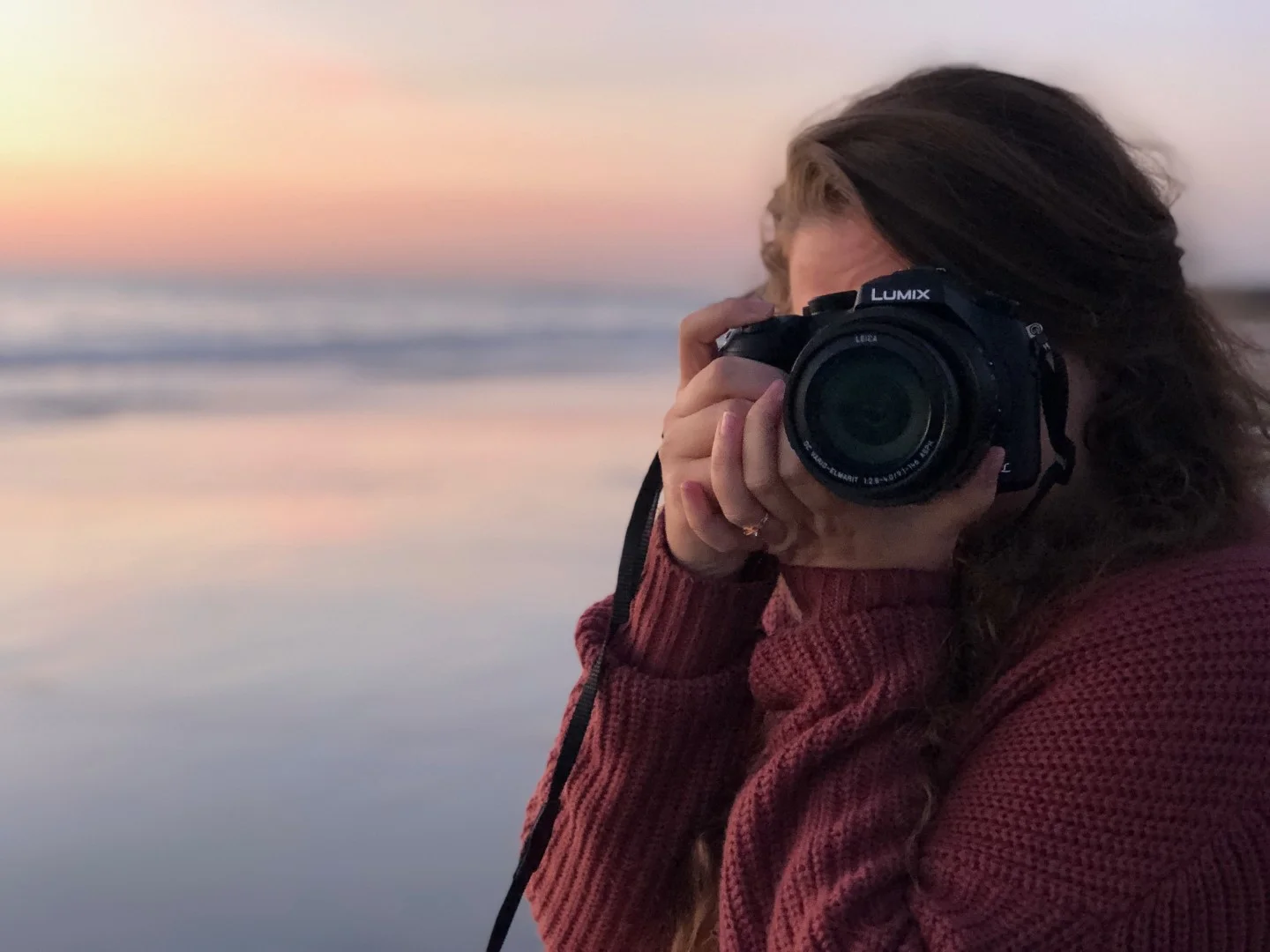
Before we ask what photography is, it helps to ask something deeper:
What is beauty?
In one of my early philosophy classes, beauty was described in a dozen different ways.
As confidence.
As authenticity.
As generosity of spirit.
As something natural and diverse.
As something shaped by perspective and experience.
What I’ve come to understand — both personally and in my therapy practice — is this:
Beauty is congruence.
It’s the felt sense that something is fully itself. Or that something beautiful brings us into a state of congruence, fully aligned and present in the moment of witnessing beauty.
In people, beauty isn’t perfection. It’s when someone presents outwardly in alignment with who they are internally. No performance. No holding back. No shape-shifting.
And we feel that.
Can Beauty Be Captured?
So then — can photography capture beauty?
Not entirely.
A camera can freeze a moment, but it cannot fully capture the lived experience of it.
The salt in the air.
The warmth on your skin.
The internal shift that happened when you exhaled.
But photography can do something powerful.
It can translate meaning.
There’s a difference between photographing your life to prove something and photographing your life to understand something.
In a culture where many people — especially younger generations — document every moment, it’s easy for photography to become performance. A way to curate identity. A way to manage how we’re perceived.
But artful photography is something else.
It’s interpretation.
After the image is taken, the photographer adjusts light, contrast, shadow, cropping. Not to falsify reality — but to highlight what mattered. To communicate what the moment meant.
That process mirrors healing.
We revisit memories. We reframe. We adjust contrast. We see what we couldn’t see before.
Over time, the meaning of an image changes because we change.
Why I Photograph Sunsets
I tend to photograph sunsets.
Not because they are rare — but because they are rhythmic.
A sunset signals closure without finality. The day is ending, but it isn’t gone forever. Rest is coming. And tomorrow returns.
For nervous systems shaped by unpredictability, that rhythm matters.
A sunset reminds us:
There is an ending.
There is a pause.
There is renewal.
It anchors us in time — where we were, where we are, where we hope to go.
Photography, at its best, becomes a way of marking meaning. Of honoring transition. Of remembering who we were in a specific season.
A Picture Is Worth a Thousand Words — But Not for the Reason You Think
The phrase “a picture is worth a thousand words” isn’t about explanation.
It’s about resonance.
An image bypasses cognition and lands in the body. It evokes memory. Emotion. Association.
For many trauma survivors, accessing narrative can be difficult. But an image can open something wordless. A doorway into sensation. Into longing. Into grief or hope.
Photography, then, is less about proving a life and more about witnessing one.
So instead of asking, can you capture beauty?
We ask:
Can you recognize beauty when you feel it?
Can you allow yourself to be it?
Beauty — like healing — isn’t about flawlessness. It’s about alignment. When you know yourself and allow yourself to be seen in that knowing, there is a quiet confidence that doesn’t need validation.
Whether or not you ever pick up a camera, your life itself becomes the art.
And the most powerful images are often the ones where nothing is being performed — only lived.
I often think of journaling similarly, a declaration of self-witnessing our beautiful, although often messy, self-expression.
However you choose to express and be witnessed, I wish you a positive experience as you remember how to play as an adult, finding your own experience of congruence.