Several years ago, I stood in front of David at the Galleria dell’ Accademia in Florence for the first time.
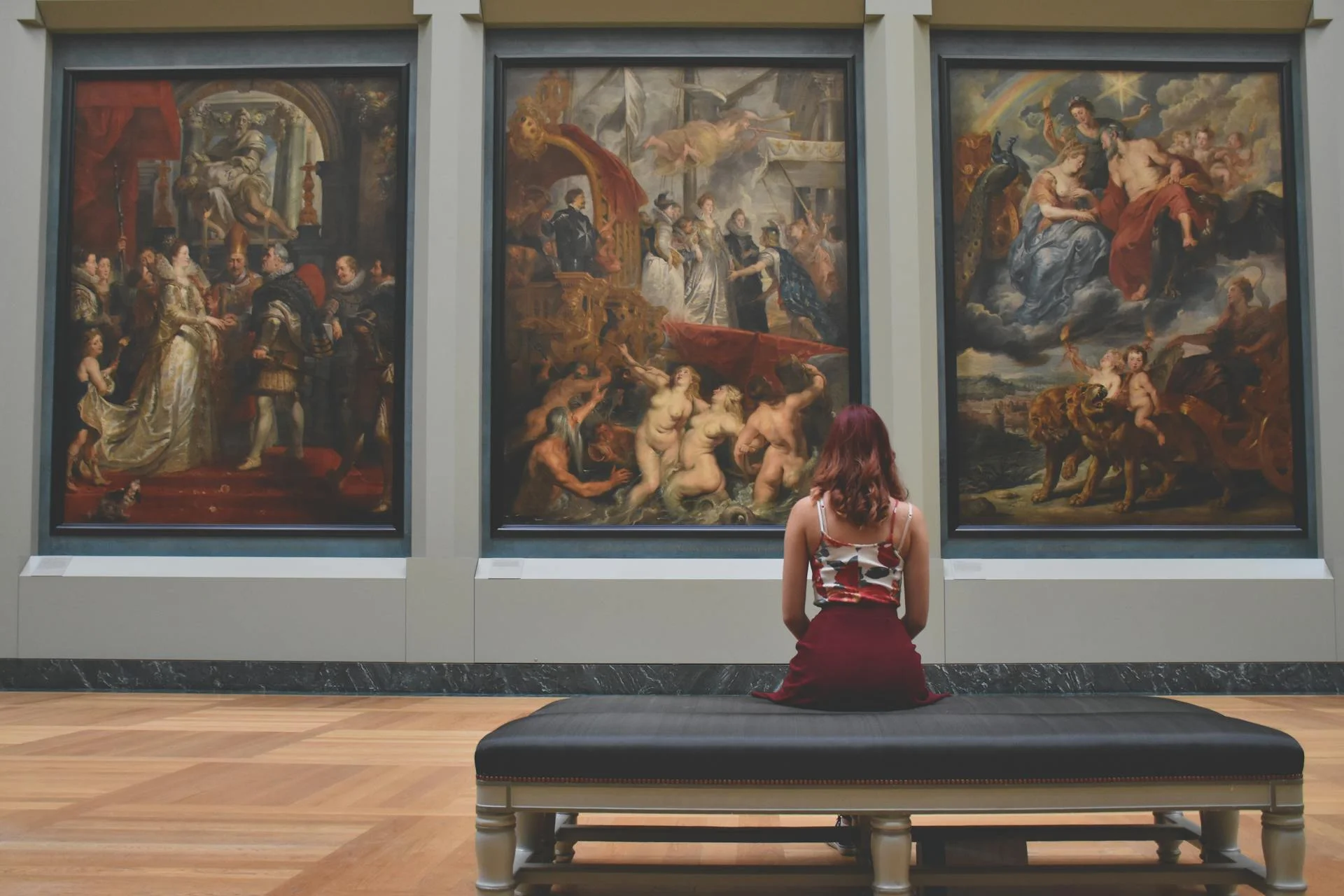
The room was full. Dozens of people moved through the gallery, passing sculpture after sculpture — ignoring Michelangelo’s unfinished work and then slowing when they reached him.
Why?
Yes, historically, David marked a shift during the Renaissance to depict the true human, athletic figure. Yes, the anatomical precision was revolutionary. Yes, the scale is staggering.
Standing there, I had the sense that people were responding to something beyond technical skill.
David is not depicted after victory, but before uncertainty.
David stands alert, not yet triumphant.
His posture holds tension. Attention. Almost as if he is quietly drawing inward before moving into a courageous act.
Maybe that’s part of what draws people in — not perfection, but the recognizable feeling of being on the edge of something difficult.
Art Is a Nervous System Experience
Museums tend to label art with dates and names, as if information is what makes something meaningful. But art doesn’t land in the thinking brain first.
It lands in the body.
Your chest tightens. Your breath slows. You lean forward. Or you pull back.
Art is relational. It’s a conversation between the inner world of the creator and the inner world of the observer.
When a piece moves you, it isn’t because you’ve reasoned your way into admiration. It’s because something wordless has been touched.
For many of us — especially those who learned early to disconnect from our own experience — that moment of being moved can feel disorienting. Even uncomfortable.
But discomfort isn’t a problem.
It’s information.
The Courage to Be Seen
I used to think art was about talent. Or originality. Or perfection.
Now I think art is about congruence.
To create something honest — something that reflects your interior world outward — requires self-knowing. It requires tolerating vulnerability. It requires allowing others to see what is true for you without controlling their response.
That’s not just art.
That’s healing.
Many of the clients I work with learned to become what others needed. To shape-shift. To perform. To anticipate. To keep the peace. Their creativity went toward survival.
So when they encounter art that feels raw or embodied or unapologetic, it can stir grief —
‘I don’t know if I’ve ever been that visible.’
But visibility isn’t about performance. It’s about integration.
The artist is not asking for approval. They are allowing themselves to be witnessed.
And that is profoundly regulating.
Why We Slow Down in Front of Certain Things
You don’t need an art degree to feel something in front of a sculpture like David.
What you’re sensing may be:
Strength without aggression
Vulnerability without collapse
Readiness without panic
Exposure without shame
That balance is rare. In art — and in people.
When we see it embodied, even in stone, our nervous system recognizes coherence.
And coherence is magnetic.
It inspires in us a hope for something similar.
Let Art Change You
Art is not meant to be consumed passively.
It’s meant to provoke reflection. To stir something dormant. To awaken questions you didn’t know you were carrying.
If a painting makes you uncomfortable, stay with it. If a sculpture unsettles you, notice where you feel it. If something draws you in, get curious.
Growth often begins as friction.
You don’t have to become a sculptor or painter to be an artist in your own life.
But you might begin asking:
Where am I hiding?
Where am I bracing?
What part of me wants to be seen?
Art can be a doorway back to yourself. A method of right brain expression the left brain translates to know you more fully.
And in that way, it is less about masterpieces in museums — and more about the slow, courageous act of becoming whole.